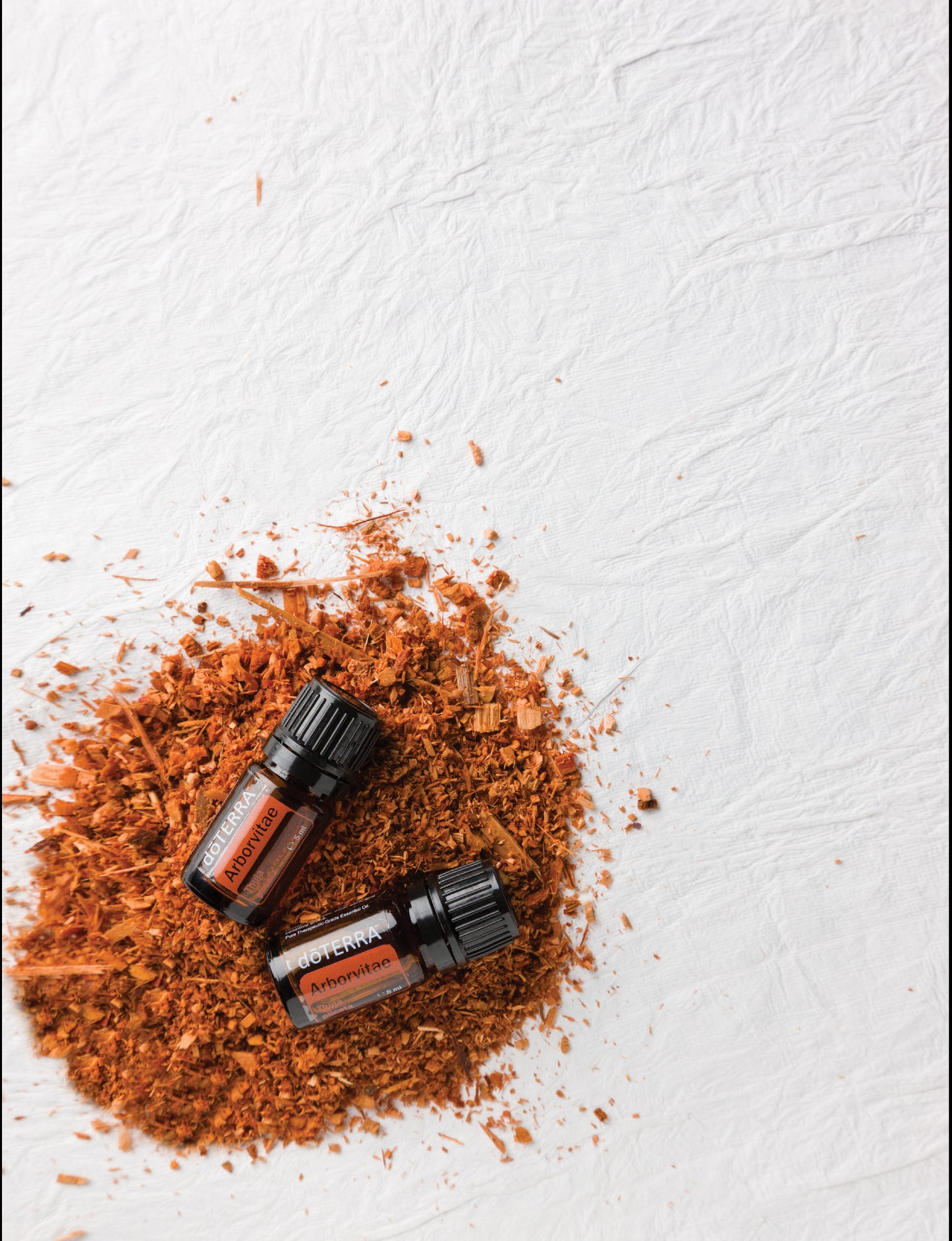
Arborvitae Essential Oil 5 ml - doTERRA
Thuja plicata
Known as the "tree of life," Thuja plicata provides a warm, woody essential oil often used in meditation practices. Thuja also possesses cleansing properties, making it beneficial for skincare.
Primary Benefits
- Thuja essential oil may be beneficial for skin.
- Often used in meditation practices.
- Known as the “tree of life,” Thuja is abundant in beneficial properties and has a distinctive woody, warm, and earthy aroma.
Reach a Higher State of Consciousness with Arborvitae Oil!
Uses
- Combine with Cedarwood and Frankincense essential oils for a woody, warm, homemade cologne.
- Use topically on the skin for yoga to enhance the experience of your practice.
- Apply to wrists and ankles before hiking and other outdoor activities to enhance your readiness.
Directions for Use
Cautions
Possible skin sensitivity. Keep out of reach of children. If you are pregnant, nursing, or under a doctor’s care, consult your physician. Avoid contact with eyes, inner ears, and sensitive areas.
Sourcing
Arborvitae, or Thuja plicata, is a remarkably resilient evergreen tree, commonly known as Western Red Cedar. However, as a member of the Thuja genus, Arborvitae is part of the cypress family, not the cedar family. Arborvitae trees can reach heights of up to 70 meters. Some specimens can live for over a thousand years, with the oldest recorded tree having lived for 1460 years. Arborvitae repels insects, even termites. In Native American cultures, the uses of Arborvitae were passed down through generations. The wood was originally used to build canoes, totem poles, and homes. Its roots and bark were used to make other useful items, such as baskets, rope, and twine. Arborvitae proved ideal for all such purposes due to its chemical composition and insect-repelling properties, minimizing damage and ensuring maximum durability. Arborvitae essential oil is steam-distilled from the wood itself. However, to avoid unnecessary felling of trees, the oil is produced only from the sawdust and wood scraps remaining after Arborvitae trees have been processed by the timber industry.
Teilen